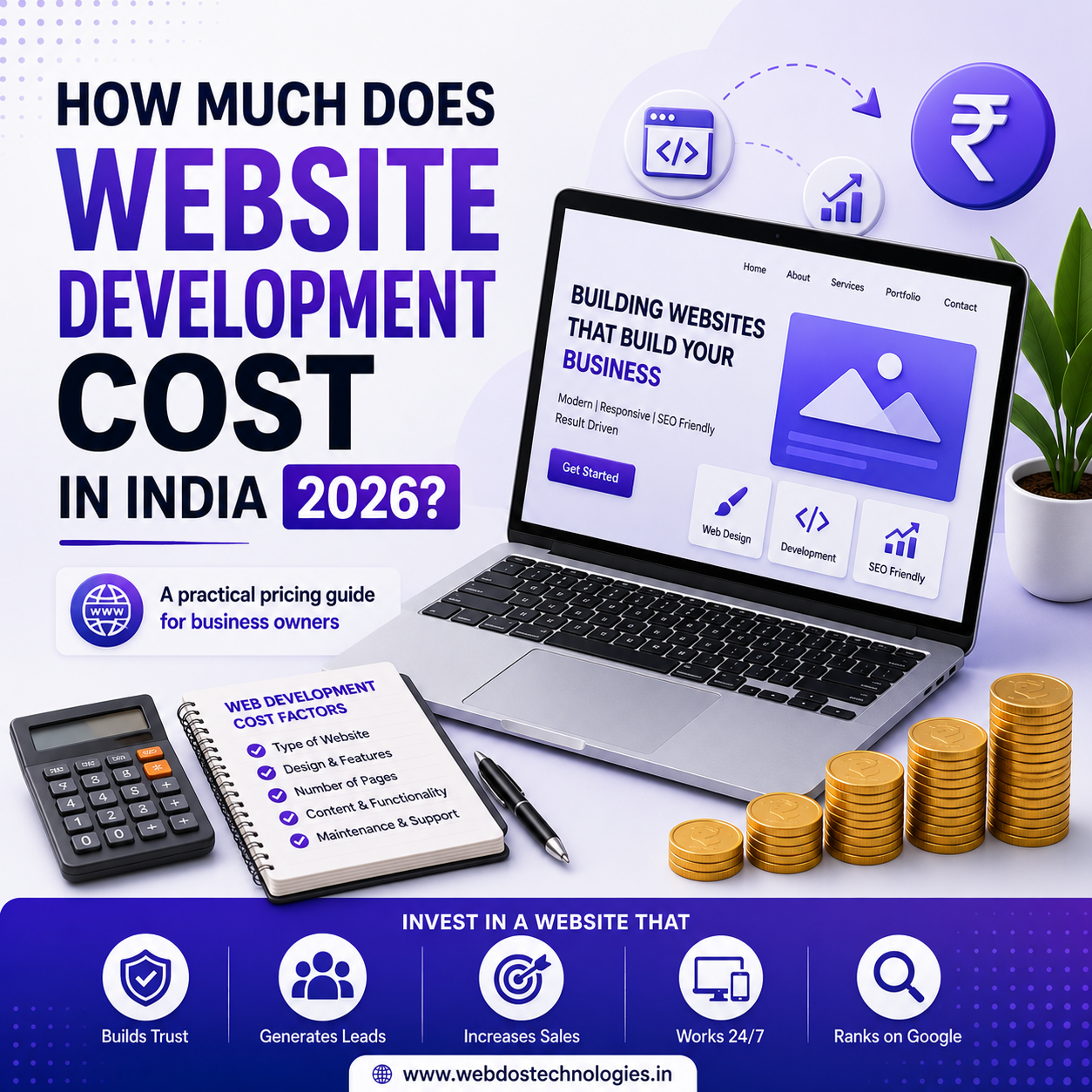
A Practical Pricing Guide for Business Owners
Every successful business reaches a point where social media alone is no longer enough. Customers want to visit your website before they call, make a purchase, or trust your brand. Your website has become your digital office, sales representative, and brand identity—all working 24 hours a day.
One of the first questions business owners ask is:
“How much should I invest in a professional website in 2026?”
The answer isn’t a fixed number because every business has different goals. A local coaching institute doesn’t need the same website as an eCommerce brand or a manufacturing company.
In this guide, we’ll explain what affects website pricing, what you should actually pay for, and how to avoid costly mistakes.
Why Website Prices Vary So Much
Imagine asking, “How much does a car cost?”
The answer depends on whether you’re buying a hatchback, SUV, or luxury vehicle.
Website development works exactly the same way.
The final price depends on the business objective rather than just the number of pages.
Some websites simply display information, while others generate leads, automate enquiries, process online payments, manage customer accounts, or integrate with third-party software.
That’s why professional website pricing can vary significantly.
Factors That Decide Website Development Cost
Before discussing numbers, it’s important to understand what you’re actually paying for.
1. Type of Website
The biggest pricing factor is the type of website your business requires.
Examples include:
- Business Website
- Corporate Website
- Portfolio Website
- Educational Website
- Healthcare Website
- Real Estate Website
- E-commerce Website
- Custom Web Portal
The more functionality required, the higher the investment.
2. Design Quality
There is a major difference between using a ready-made template and designing a website from scratch.
A professionally designed website focuses on:
- Better user experience
- Brand identity
- Higher trust
- Better conversion rates
- Mobile usability
Custom UI/UX design generally costs more because every section is created specifically for your business.
3. Number of Pages
A five-page business website obviously requires less work than a fifty-page corporate website.
However, quality matters far more than quantity.
A well-designed five-page website can generate more enquiries than a poorly designed fifty-page website.
4. Features & Functionality
Each additional feature increases development time.
Examples include:
- Appointment Booking
- Payment Gateway
- Customer Dashboard
- Live Chat
- Membership Area
- Blog
- Product Catalogue
- CRM Integration
- WhatsApp Integration
- Multi-language Support
5. Content Creation
Many business owners forget that content also has value.
Professional websites usually require:
- Website copywriting
- Service descriptions
- Images
- Graphics
- Icons
- Banners
- Call-to-action sections
High-quality content improves both user engagement and search engine visibility.
Website Development Cost in India (2026)
The following price ranges are realistic for professionally developed websites.
| Website Type | Estimated Investment |
|---|---|
| Landing Page | ₹8,000 – ₹15,000 |
| Small Business Website | ₹15,000 – ₹35,000 |
| Corporate Website | ₹30,000 – ₹75,000 |
| WordPress Business Website | ₹20,000 – ₹60,000 |
| E-commerce Website | ₹45,000 – ₹2,00,000+ |
| Custom Web Application | ₹80,000 – ₹5,00,000+ |
These are indicative ranges. Final pricing depends on project scope and complexity.
Hidden Costs Most Businesses Ignore
Many companies only compare website development charges and overlook recurring expenses.
These may include:
- Domain Registration
- Web Hosting
- SSL Certificate
- Business Email
- Annual Maintenance
- Premium Plugins
- Security Monitoring
- Website Backup
- Performance Optimization
- Technical Support
Planning for these costs from the beginning helps avoid unexpected expenses later.
Should You Choose the Cheapest Website?
This is one of the biggest mistakes businesses make.
A low-cost website often saves money initially but creates larger expenses later.
Common problems include:
- Slow loading speed
- Outdated design
- Poor mobile experience
- Weak security
- Difficult content management
- No SEO foundation
- Low conversion rates
Instead of helping your business grow, such websites often require a complete redesign within a year or two.
A professional website should be viewed as a long-term business asset rather than a short-term expense.
WordPress vs Custom Development
WordPress
Ideal for:
- Small Businesses
- Service Providers
- Startups
- Consultants
- Educational Institutes
Advantages:
- Faster development
- Cost-effective
- Easy content management
- SEO-friendly
- Large ecosystem
Custom Development
Suitable for:
- Large Organisations
- SaaS Products
- Enterprise Applications
- Custom Portals
- Businesses requiring advanced workflows
Advantages:
- Tailored functionality
- Better scalability
- Greater flexibility
- Advanced integrations
- Complete ownership of features
The right choice depends on your business goals rather than your budget alone.
What Makes a Website Worth the Investment?
A professionally developed website should do more than look attractive.
It should:
- Load quickly
- Work perfectly on every device
- Rank well on search engines
- Generate enquiries
- Build customer trust
- Represent your brand professionally
- Grow with your business
A website that brings qualified leads every month becomes an investment that pays for itself.
Questions to Ask Before Hiring a Website Development Company
Before signing any agreement, ask these questions:
- Will my website be mobile responsive?
- Is SEO included?
- Can I edit the content myself?
- Is the website secure?
- What happens after launch?
- Do you provide technical support?
- Will my website load quickly?
- Is the design custom or template-based?
The answers to these questions reveal far more than the quoted price.
Why Businesses Choose Webdos Technologies
At Webdos Technologies, we believe a website should contribute to business growth—not simply exist online.
Our development process focuses on:
- Business-first planning
- Modern UI/UX
- Responsive development
- Fast loading performance
- Search engine optimization
- Clean coding standards
- Security best practices
- Scalable architecture
- Long-term technical support
Every project begins with understanding the client’s business objectives before writing a single line of code. This approach helps create websites that are not only visually impressive but also effective at generating enquiries and building credibility.
Final Thoughts
Website development is no longer just about creating an online presence. It is about building a platform that supports your business goals, improves customer experience, and creates opportunities for growth.
Choosing a website based solely on the lowest price can become expensive in the long run. Instead, focus on value, quality, scalability, and the expertise of the development partner.
A professionally developed website is one of the few business investments that continues working for you every hour of every day.
Frequently Asked Questions
How much does a basic business website cost in India?
A professionally developed business website generally starts from around ₹15,000, depending on design, functionality, and content requirements.
Is WordPress a good choice for business websites?
Yes. WordPress is suitable for most businesses because it is flexible, scalable, SEO-friendly, and easy to manage.
How long does website development take?
Most business websites are completed within 2–6 weeks, depending on the project scope and content availability.
Does website development include SEO?
Basic technical SEO is often included by professional agencies, while ongoing SEO services are usually offered separately.
How often should a website be updated?
A website should be reviewed regularly for content updates, security improvements, performance optimization, and compatibility with modern browsers.